Nighbor breaks 21-year SC record

     COLUMBIA, S.C. — Clover senior Ella Nighbor swept the 1,600 and 3,200 meters at the South Carolina High School League 5A Division I State Championships on May 14, winning her second straight 1,600 title and breaking a 21-year-old state meet record at Spring Valley High School.

   Nighbor, a University of South Carolina commit, entered as the top seed in the 1,600 and won it in 4:56.28, then returned about an hour later to take the 3,200 in 10:43.17. Both races came just off her lifetime bests of 4:54.36 and 10:26.58, performances coach Christopher Young described as championship efforts rather than time trials.

   Her winning 3,200 time of 10:43.17 broke the SCHSL 5A state meet record of 10:47.72, a mark that Spring Valley’s Kate Niehaus had held since 2005. Niehaus still owns the meet’s 1,600 record of 4:55.45, set in 2006; Nighbor’s 4:56.28 this year fell just 0.83 seconds short of breaking it.

   “Ella running the double is an incredible feat across the board,” assistant coach Ben Clark said.

   The 1,600 victory made Nighbor a two-time state champion in the event, a year after she won it as a junior and placed sixth in the 3,200. The double gives her four individual state titles, alongside a team cross country state championship and 13 school track records. 

   That body of work, which also includes a 5K best of 16:40.44 and a 2,000-meter steeplechase mark of 6:58.71, establishes her in Young’s assessment as the most accomplished female distance runner in Clover history and one of the best in state history.

   Nighbor’s 1,600 title came in a 1-2 Blue Eagle finish, with senior Ava Jagielski, an Anderson University commit, running on Nighbor’s shoulder through 800 meters before kicking past Lexington’s Kendra Miles in the final 200 to take second in a personal-best 5:04.50.

   “These ladies have made remarkable progress through the years, achieving success they never imagined,” Young said. “To have them go one and two in their final high school race together — it couldn’t be a better ending to our four years together.”

   For Nighbor, the double closed a four-year Clover career and, by Young’s account, delivered the program’s signature moment of the meet.

   The Blue Eagles also placed fourth in the boys 4x800 relay in a school-record 7:53.44, with top-six finishes from Trinity Hall and Clara Powell in the high jump and Jamarquise Wilson in the 400 hurdles.

   The day marked a milestone for a program splitting between Clover and Lake Wylie, with several seniors competing one final time, none more accomplished than Nighbor.

   Clark put it simply: “She is such a hard worker, she is just now scratching the surface of all the great things she is going to do.”
By Ryan Sconzo June 23, 2026
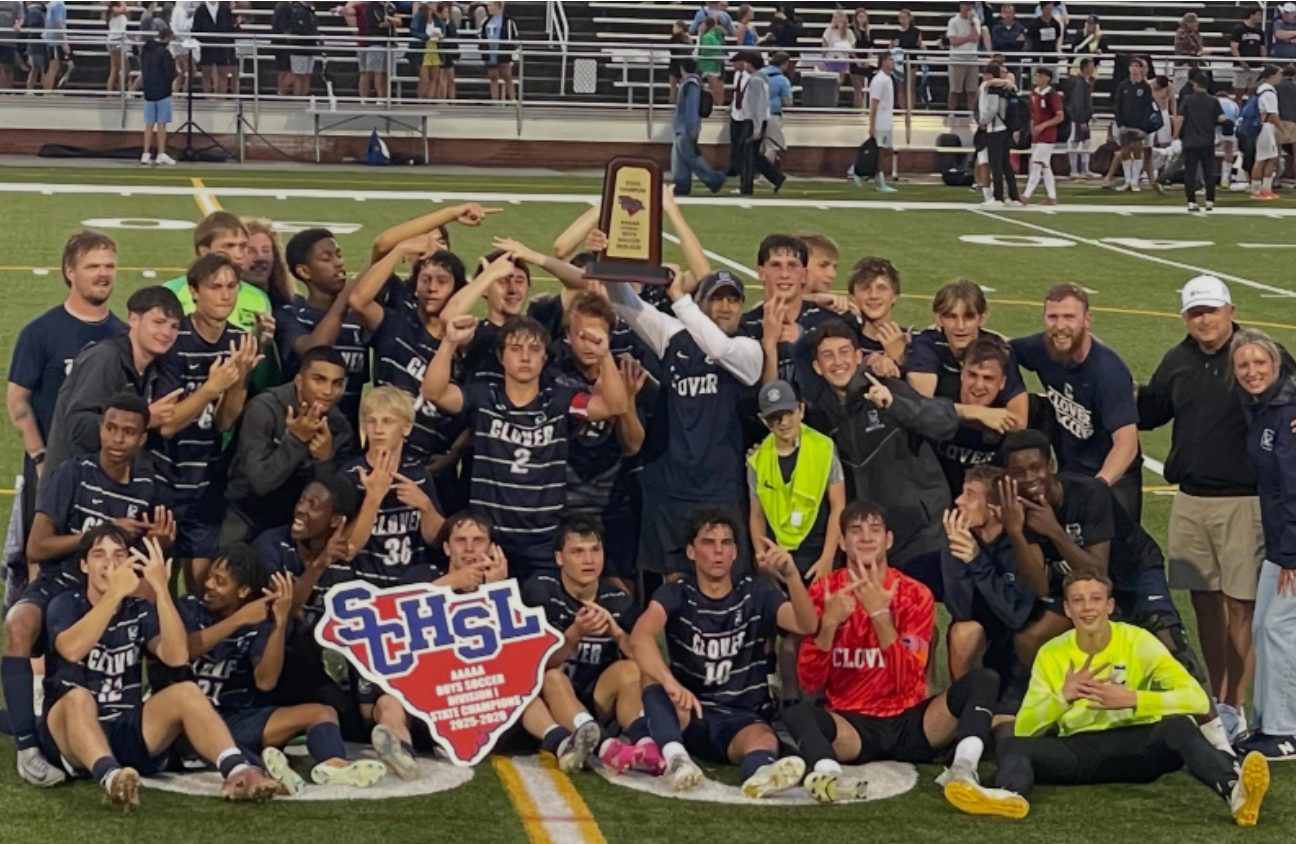
COLUMBIA, S.C. — The Clover High School men’s soccer team captured the SCHSL Class AAAAA Division I State Championship at Memorial Stadium, defeating Wando High School 1-0 in a grueling match extended by a three-hour weather delay. The two teams battled through 80 scoreless minutes of regulation. Clover’s Thomas Jenkins missed early chances in the 11th and 22nd minutes, while goalkeeper Brinkley kept the game deadlocked with a crucial save against Wando in the 39th minute. Just as regulation ended, a violent thunderstorm forced officials to suspend play, sending teams to the locker rooms and fans to their cars for over three hours. When the two 10-minute overtime periods finally began, Wando—who entered the match 23-2—unraveled due to disciplinary issues. Two red-card ejections, including one in the 57th minute following a second yellow card, reduced the Warriors to just nine men. Clover wasted no time capitalizing on the numerical advantage. With under three minutes remaining in the second overtime, Jenkins found space on the wing and delivered a perfectly weighted cross into the box. Senior Evan Tubiolo timed his run flawlessly, heading the ball into the back of the net to break the tie. Wando mounted a dangerous late attack to equalize, but Brinkley secured the shutout victory with a commanding save in the final minutes. The 1-0 golden-goal finish capped off a dramatic five-hour ordeal, providing a perfect championship sendoff for Clover’s senior class.
By Anthony Mathipannha May 19, 2026
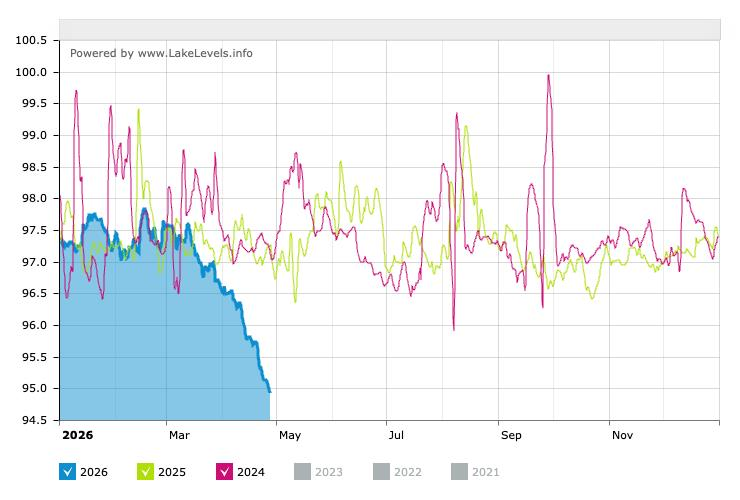
YORK COUNTY, S.C. — Clover has become the first municipality in York County to declare Stage 2 water restrictions as an ongoing drought continues to strain the region’s water supply. What’s Happening? The drought — the worst to hit the region in more than a decade — has pushed Lake Wylie water levels 15 to 17 inches below average, exposing submerged obstacles that many boaters don’t realize are closer to the surface than usual. The lower levels have triggered a spike in rescue calls and boat repairs as temperatures rise. Forecasters have not issued any significant rainfall outlook for the coming weeks, raising concerns that conditions will worsen heading into summer. As reported on WBTV, Catawba Riverkeeper Brandon Jones explained boat rescue calls have increased 40% since the drought began. Jones said water flow into Lake Wylie has dropped from more than 500 liters per day to about 150 liters as of April 20. He added that current water levels are the lowest the lake has seen in 80 years, with docks now sitting above the waterline. Without significant rainfall, levels may continue to drop. Effects of the Drought TowBoatUS reports a surge in calls as shallow water conditions create hazards across the lake. “We’ve had a huge influx of groundings and low water-related incidents here on the lakes as the water has been low,” said Logan Thomas, a captain with TowBoatUS. Boaters attempting to dock must now wade through shallow water on foot. Motorboat Mechanics on Lake Wylie has repaired dozens of damaged propellers in the past two weeks alone as exposed rocks, trees, stumps, and other debris increasingly cause hull and propeller damage. Repairs to damaged propellers and lower units can cost boat owners hundreds to thousands of dollars, and mechanics warn that repair timelines are growing as demand rises. The drought’s severity has forced officials to close boat ramps, including those at Allison Creek, as of early May. For now, the boat ramp at Buster Boyd Bridge remains open. The Lake Wylie Marine Commission is closely monitoring conditions and may take additional action if water levels continue to fall. Current Solutions Experts are currently encouraging boaters to plan careful routes, stay within marked channels, and consider towing coverage. TowBoatUS also has four boats out across the lake 24/7 and encourages calling them anytime anyone is on the lake boating. A big solution that York County Utilities has come up with is encouraging residents to reduce water usage. Although not mandatory and not restricting it, it is recommended that residents in York County volunteer to reduce water usage. This includes limiting watering to no more than two days per week, reducing washing down of sidewalks, walkways, driveways, parking lots, tennis courts, and other hard-surfaced areas, reducing washing down of buildings for purposes other than immediate fire protection, and reducing residential washing of vehicles. Use car washes that use recycled water instead of washing vehicles at home. This solution is made to protect the local water supply and limit the future use of other mandatory restrictions. The Catawba Wateree Drought Water Management Group plans meetings on May 16th. As of May 1st, water restrictions have been placed in Clover and York, and as of May 5th, Fort Mill has implemented water restrictions. Residents in Clover and Fort Mill will follow a fixed water schedule. Properties north of Highway 55 are only allowed to water on Wednesday and Sunday nights, while those south of the highway can water on Tuesday and Saturday nights. They are responsible for conserving water and meeting the goal of decreasing water usage by 15% of normal use. Only using the water for necessary usage, public safety, or maintaining regulatory compliance. While Fort Mill doesn’t follow a fixed schedule, they are encouraged to limit irrigation and watering during peak daytime hours. York and Clover's declaration of stage 2 to limit water will mean that residents will voluntarily limit their water use in their household, using only 300 gallons a day, as they enter stage 2 of the drought as of May 6th.
By Anthony Mathipannha May 5, 2026
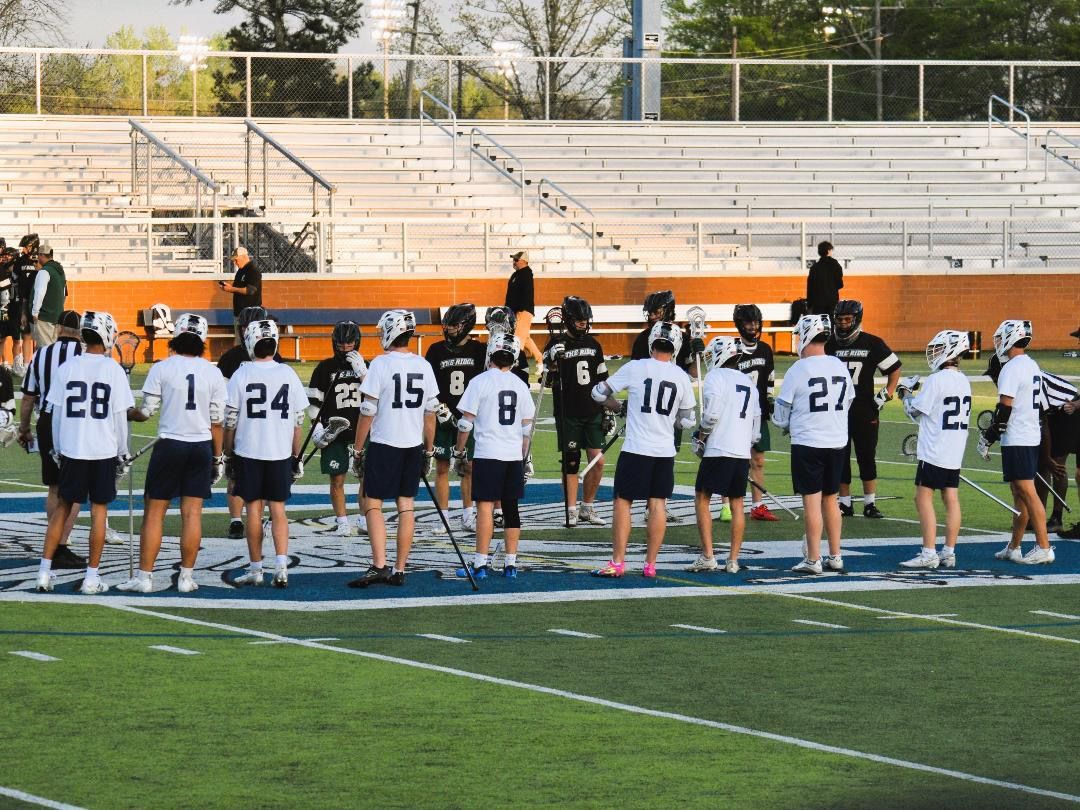
Men's and Women's Lacrosse End of Season
By Kyle Lowe April 30, 2026
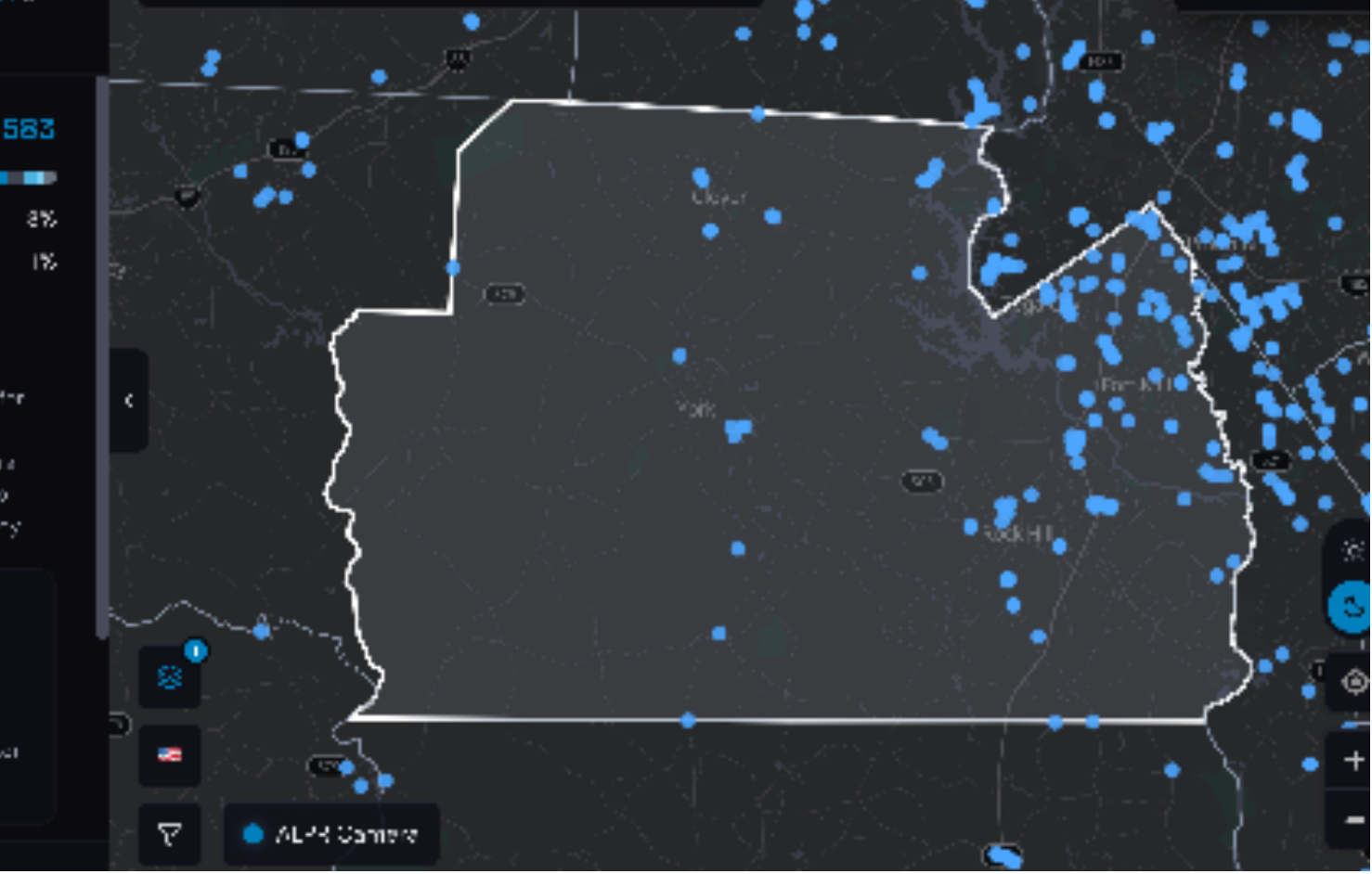
Clover S.C.-Six Flock traffic cameras have recently been installed in the Clover area. These cameras have raised questions about people’s fourth amendment right to privacy and what data is really being collected. This controversial topic has brought up many benefits and concerns. After much research, the cameras have been found to not violate the fourth amendment. They are owned by a private company and placed on private property not owned by the government. Since they are not implemented by the government they are therefore not violating any laws or amendments. According to Brittany Farr, a previous town council member, “Well, that may be true, but I also shouldn’t have to forfeit all my privacy just to go out in public.” She later explains “...I would argue on that, that if the government is seeking to have those…public, private partnerships, that is where it would be a violation of the Fourth Amendment because the government is supposed to protect that. So if they’re outsourcing to a private company, that in and of itself would violate us.” According to eyesonflock.com, data is deleted after thirty days. Information about what organizations the data is shared with is not provided because it is not shared publicly from the Flock company. According to https://transparency.flocksafety.com/clover-sc-pd, the policies between Flock and the Clover PD are shared. These policies include that the cameras detect license plates and vehicles, not facial recognition, gender, or race. The Acceptable Use Policy states that data is not shared with third parties and is only used by the Clover PD for law enforcement. The cameras are not used for traffic and immigration enforcement, or intimidation. All data that is stored requires valid reasoning. Farr describes more about the cameras by saying, “...it’s a huge, huge network, and these things are able to, through AI, essentially, do pattern recognition, predictive policing, you know, it recognizes, makes, models, color, and any anomaly on a vehicle, even roof racks. So if it’s only looking at license plates, how can it differentiate a roof rack?” After September eleventh the government implemented the Patriot Act. This act caused Americans to give up some of their privacy for safety overall. Now with new technology there seems to be no boundaries. Farr explains “...that’s what I keep coming back to, is that there’s…no framework in place. We’ve just implemented something and not had any oversight in place whatsoever.” She describes how representatives of the people push things though because it sounds like a good idea or it’s considered “safe” and helps with our safety. Farr continues by saying “I just want to see it balance, because anything that can be used for good can be used for bad and anything that can be used for bad can also be used for good, I’m not naive to that fact, but there had to be some sort of framework that protects everyone involved and allows for accountability when things are misused.” After attempting to reach out to the Clover Police Department with no response, Farr recounts “There is some incentivization for officers to speak with other people in the community, like businesses, churches, neighborhoods, to expand this network of cameras, and they are planning to request six more in this coming budget.” The dates for this upcoming budget public hearing have not been planned yet, but they will be posted on the Town of Clover website when determined. Other states, like Colorado, have proposed bills creating stricter access to Flock cameras for law enforcement officers according to https://kdvr.com. As of right now there are no passed laws in regards to the Town of Clover, but two bills have been proposed in the last legislative session in 2025 according to Farr. She points out House Bill 4675 which has the most points to it but is still weak in language. She says “I do have some friends that work with their local GOPs that are looking into that legislation and trying to see how it can be strengthened…” Farr dives into the philosophy around representative government by describing, “...if we don’t pay attention to what the people we voted for are doing, lots can happen and that can happen fast and not in our favor.”
By Piper Haycock April 22, 2026
CLOVER, S.C.-Artificial Intelligence (AI) is now a near-universal digital utility in businesses and everyday life. With the rapid growing usage of AI, more databases, housed in data centers, are needed. The government plans to invest around $500 billion in the Stargate project. This initiative is a part of the Trump Administration’s private deal to “revolutionize” infrastructure for the leading AI corporations such as: Oracle, OpenAI and SoftBank. QTS Data Centers are one of the largest and fastest growing hubs for large-scale AI, cloud computing and high-performance computing workloads. QTS currently has 14 new data centers in construction in addition to their near two dozen running locations. In 2023, QTS bought land in Lake Wylie and recently expanded that land to around 143 acres. The data center will cover this land, spanning across Handsmill Highway and Paraham Road. According to the Environmental and Energy Study Institute (EESI), larger data centers can consume 5 million gallons of water daily, which is about equivalent to a town with a population of 30,000. To add, data centers must use fresh water, which is already scarce with only 3% of all water being fresh. For data centers to function without overwhelming their computers, they must use hefty amounts of water to cool their systems. Data centers in dryer locations pose a threat to the local water supply. However, QTS states their water will come from York County Water & Sewer, which is Lake Wylie/Catawba River water that is treated and filtered, then purchased from the City of Rock Hill. Unlike traditional data centers, QTS uses a closed loop system, which means water is recycled over and over through the system. This means that water is a one-time fill for the initial start of operations. After operations begin, the system “does not withdraw, consume, or discharge water” says Karen Cohen, the QTS Senior Public Relations Manager. QTS says after that they only use another 20,000 gallons a month for appliances like toilets and sinks. QTS data centers guarantee around 5 gigawatts of power to their privately signed customers. To put this into perspective, 4.8 gigawatts could power around 3.25 million homes struggling to pay electricity bills. QTS keeps the specific power needs of each data center confidential for security purposes. Global warming is not a “new” topic whatsoever, but what is new is the exponential rate at which it is happening. 2024 and 2025 have been recorded as the most dramatic and warmest years for climate change. 2024 was also one of the “big boom” years for generative AI. Since then, there have been thousands of data centers built, with plans for more. It can be predicted, and expected, that climate change will continue to be affected negatively. According to their website, QTS is trying their best to not contribute to carbon emissions and global warming. They work to become carbon neutral and minimize environmental impacts. QTS promised full transparency with Clover to maintain mutual trust, keeping our community up to date with the data center construction. Many believe QTS has not earned the trust of the Clover community due to suspicion that our County Council is not being forthcoming. York County Council Member Andy Litten has talked and posted about this topic on Facebook, for those looking for more information. On an economic scale, QTS should benefit Clover. Their website states a study “found that between 2017 and 2023 the industry’s total fiscal support to federal, state and local governments increased from $66.2 billion to $162.7 billion”. In spite of this, some are concerned about QTS paying a set fee in lieu of taxes. This means they will pay a set fee instead of normal property taxes for a contracted amount of time. However, Cohen says that the data center is “expected to boost regional growth and advancements”. QTS is also working to disrupt the community as little as possible. There are many projects in development in the Clover and Lake Wylie area, making many concerned about having yet another construction site. The base development is predicted to be complete in 2027. As development is speeding up, QTS says they will minimize impacts regarding dust, roads, cleaning, and traffic. QTS is only a small part of South Carolina’s electricity cooperatives plan to up the rate of data center projects, according to the SC Data Center Development Act. Every data center company operates differently with different regulations and precautions. Countless centers pump dangerous chemicals into the air and waste water, but some take the other side and work to be as environmentally friendly as possible. From the information shared, QTS positions itself as the second type of data center. With everything said, the future is uncertain, but the Clover community should go into this new era with an open mind. QTS seems to be working to set a new standard to oppose the current stigma and backlash on data centers.
By Anthony Mathipannha March 24, 2026
A new bill has been passed and is awaiting Governor McMaster’s approval, and it could change how minors use social media and screen time overall. The South Carolina Social Media Regulation Act passed the General Assembly and was ratified by the State Senate. Aimed to protect minors and set restrictions on large tech companies, the goal would require those companies to provide tools to limit addictive features. If passed, this would allow parents to restrict their child's access to social media platforms mostly during the later hours, from 10 P.M. to 6 A.M. Another goal of the bill is to limit social media during school hours. This bill was passed by lawmakers to make companies give more power to parents. The goal is more parental control and to protect minors from harmful or explicit content when they are online. This also limits how much data social media companies can collect on minors and limits platforms that earn more than 25 Million dollars from doing so. This won’t be the lawmakers' only move as they plan to further push to make tighter protection for minors. The bill raised concerns for places such as small-owned businesses that rely on social media to promote products. An additional concern is reaching customers through social media. It would be addressed as only targeting for one demographic and would not damage any small businesses. Under the new proposed law, social media companies would be charged for handling minors' data, such as collecting and sharing. If improperly reported data comes the social company is charged. They would need to make reports from third-party auditors detailing features and the minors' activity. Failure to do so cost them. Governor McMaster will review the bill being passed once it hits his desk, and if signed, the new law will take effect. The bill passed both the House and Senate and was sent to the Governor on February 4, 2026, but it will take effect as soon as Governor McMaster signs it off.
By Anthony Mathipannha March 24, 2026
SC Lawmakers are a step closer to dismantling the 113-year-old South Carolina High School League. The SCHSL is the governing body for high school athletics in SC. This move marks a long-running feud between the General Assembly and the league, which has overseen sports in the state since 1913. Under the House Bill 4163, State leaders cited multiple primary reasons from multiple legislative complaints. Student athletes public safety, Pointed out by legislators, failures to ensure EMS staffing at athletic contests showed a lack of accountability by SCHSL. This is one of the big reasons why legislators want to dissolve the league. Transferring: a changed transfer rule would allow student-athletes to be eligible to play immediately after transferring once during middle school and once during high school. The current league rule forces student-athletes to sit out a season unless they win a formal appeal. The changes won’t be huge, but they will be significant and include revamped rulings in South Carolina Sports. The S.C. House of Representatives voted 112-0 to pass the bill, but it was heavily revamped and allowed SCHSL to keep its name. This changes multiple rulings and is put under legislative oversight and a few other agencies. Clover High School's Athletic Director Bailey Jackson, when asked about issues with SCHSL, said, “I would be in favor of being more strict on the transferring, they're moving in another direction where it's less strict. The new rules will eliminate 16 different exceptions and one free transfer.” “As for them supposedly favoring charter schools, if they live outside the little attendant zone. They only have 500 to 600 kids as opposed to 2,800 like we do. They are put in a bigger classification to balance it. It's called competitive balance to make it more competitive.” “The EMS situation in my opinion is an isolated event, we have athletic trainers and like any other school we all have emergency action plans written down that goes through every specific thing that we could possibly encounter. Injuries and transport to the hospital is one of them.” With the bill potentially going into effect and significant pressure from SC lawmakers. As of March 2nd, Jerome Singleton, the SCHSL Commissioner since 2005, is now set to retire as late as July 1st, 2027 with approval of the league executive committee unanimously approving of his said retirement. As of early 2026 the bill has passed the state house. The bill still has to be passed by the state senate and signed by Governor Henry McMaster. Moving from SCHSL to a more state-controlled athletics, would be the most significant reorganization of South Carolina youth sports in 113 years.
By Eli Jacobson March 20, 2026
FORT MILL, S.C. - Silfab Solar confirms the leakage of harmful chemicals in Fort Mill. On March 3, 300 gallons of potassium hydroxide were spilled, followed by a leak of hydrofluoric acid on March 5. While both incidents have no confirmed injuries or pose a threat of imminent harm, the temporary shutdown of Flint Hill Elementary has officials expressing frustrations, in some cases even calling for the shutdown of the facility. The York County, SC Facebook account posted, “We are incredibly disappointed that another issue at Silfab Solar has occurred; York County does not have regulatory authority but will continue to coordinate with those agencies who do.” Two subsequent leaks two days apart raise speculations about the competency of Silfab Solar. Potassium Hydroxide (KOH) exposure may cause a build-up of fluid in the lungs (pulmonary edema), a serious and possibly life-threatening emergency that makes it hard to breathe. Mistakes like these may not have caused harm this time, but continued issues like this present danger to not just Fort Mill and Lake Wylie, but also the general area of Clover. If the leak had escaped into the air, it would have caused an evacuation radius of over a mile. Parents were outraged at the incident and took it to the school system. According to a WCNC article, one parent shared, “Today was not a hypothetical. Today actually happened, and your schools were caught completely flatfooted,” WCNC reported. Fort Mill Superintendent Grey Young assured that no chemical properties were found on campus. Testing was run by Citadel EHS, but this did little to reassure parents and homeowners in the area, some even going as far as pulling their children from the district completely. According to comments to the press by a Silfab official, the March 5 leak was confirmed to actually start Feb. 27. Silfab officials knew the leak started a week ago, but claimed it was not large enough that it required any notification to county or state regulatory or emergency officials. Plant Manager Greg Basden says they’ve “got nothing to hide, a drip of that magnitude far from qualifies for notification.” Silfab reached out to parents of students affected by the leak to apologize. Most parents agree the knowledge of the leak alone should have been reason enough to raise concerns from employees. Silfab has agreed to continue to halt all production and operations while U.S. EPA and SCDES assessments are conducted. Fort Mill School District administrators were still outraged and called for the immediate shutdown of the facility. Representative David Martin has been advocating for the facilities stoppage for years, claiming, “I don’t really trust what I’m being told from Silfab.” Martin has been to Columbia to advocate for a bill made directly in response to Silfab’s operation. House Bill 4293 allows local governments to have the authority to cease industrial projects that are violating zoning regulations. The Roaring Eagle will continue to rigorously look into and follow this situation.
By Kaya Spencer February 19, 2026
YORK COUNTY, S.C.- Every February, communities across the nation recognize Black History Month, a time dedicated to honoring the history, culture, and achievements of Black Americans. In York County, that history is deeply rooted in the land, schools, churches, and historic sites that continue to tell powerful stories of resilience and contribution. Historic Brattonsville This important historical location is in McConnells, S.C. This living history site features a dedicated African American interpretation, which focuses on the history and experiences of enslaved people. The site also includes original slave quarters and the Enslaved Ancestral Burial Ground, where 481 people of African descent are buried. Throughout February, visitors can attend a special Saturday program titled “By Way of the Back Door: The Life and Times of Molly,” which explores African American life through the perspective of a woman who lived at Brattonsville from 1780 to 1865. Roosevelt School Black history is also closely tied to the Roosevelt School in Clover. During segregation, the school served as an all-Black K–12 school and was originally known as the first Clover Colored School. Although the building was destroyed during integration in the mid-1960s, its legacy remains strong. The school once served as the hub for Black education in Clover before segregation ended. Today, a historical marker stands at the former site, which now includes three baseball fields, a playground, a basketball court, and picnic tables. Green Pond United Methodist Church This church has been a very important part of Black history in the area, serving as one of the earliest and longest-lasting places of worship for African-American residents. At that time, Green Pond was widely the only church serving African-Americans in the Clover area and has remained an all-Black church, continuing to serve as a main gathering place for worship, fellowship, and mutual aid in the community. Stellie J. Jackson served as the pastor of Green Pond Church, giving spiritual leadership and guidance to the congregation. Under his leadership, the church continued its mission of strengthening faith while also supporting the social and educational growth of the community. For generations, the church has been a religious home. It has also served as a symbol of resilience, community unity, and the struggle for dignity and recognition. Green Pond Church Cemetery Another significant site is Green Pond Church Cemetery, the first cemetery for Black residents in Clover. The cemetery holds the remains of many formerly enslaved individuals. African Americans lived and worked in the Clover community before the Civil War, first as enslaved people and later as sharecroppers, farmers, laborers, and skilled workers who helped build the local economy. Even during the hardships of slavery and the Civil War, African Americans played an important role in shaping the region. Following the Emancipation Proclamation, formerly enslaved individuals in the Clover area began building independent lives. Many worked as sharecroppers or tenant farmers while striving to reunite families separated by slavery. During this time, African Americans established their own churches, schools, and neighborhoods, laying the foundation for strong Black communities that would continue for generations. Black History Month serves as a reminder not only of the struggles Black Americans have faced but also of their strength, perseverance, and lasting contributions. York County’s historic sites stand as meaningful landmarks for future generations.
By Anthony Mathipannha February 19, 2026
COLUMBIA, S.C.- The Clover High School wrestling team became the SC 5A Wrestling State Champions for the first time in the school’s history. The Dirty Birds defeated James Island 34-31 after a long, hard season. Head Coach Michael Fitzgerald started this program 24 years ago. While the program has experienced ups and downs, including some individual state championships, this is the first team win. Fitzgerald credits the team’s success to getting the right people on the coaching staff and building from there. Fitzgerald shared his feelings about the win as well. “Winning the state championship, the first wrestling state championship in school history for wrestling, definitely was a big moment. It couldn’t have been done without my assistant coaches, our wrestlers, the parents of our wrestlers, the administration, and the support from the faculty and staff. So it’s a true team victory across the board”. In the press conference before the state championship, Fitzgerald spoke about the season. “We were intentional about scheduling tough matches in front of our wrestlers, learning through losses and stacking wins.” As a result, they won important matchups throughout the season to make it to the championship match. Fitzgerald shared, “We are ready to embrace the opportunity we have here on Wednesday.” According to Fitzgerald, there were multiple standouts on the team and all worked hard throughout the season. Winning against the likes of Boiling Springs and Blythewood, picking up wins in dual matches, and beating a few perennial power schools in North and South Carolina helped build the confidence needed to take the state title. Wrestler Owen Tatum believed their winning factor throughout the season was having a great coach like Fitzgerald and being willing to go the extra mile to get their win. Throughout the season, the team focused on their belief in each other, acknowledging that the only thing they could control was themselves, and worked to improve every day. That focus helped them understand each other’s abilities during practice and gave them the confidence to push through each match and work to make each other better than the day before. They put in the work all the way to the end of the season. Wrestler Keller Brunnelson spoke of the team mindset heading into the match, “Overall, we are pretty confident, everybody is just focused to go out there and really put their best foot forward, going out there and wrestling with the mindset that we’re gonna leave it all on the mat.” And leave it all on the mat they did, and they brought home the trophy to prove it.