
Roaring Eagles All Articles
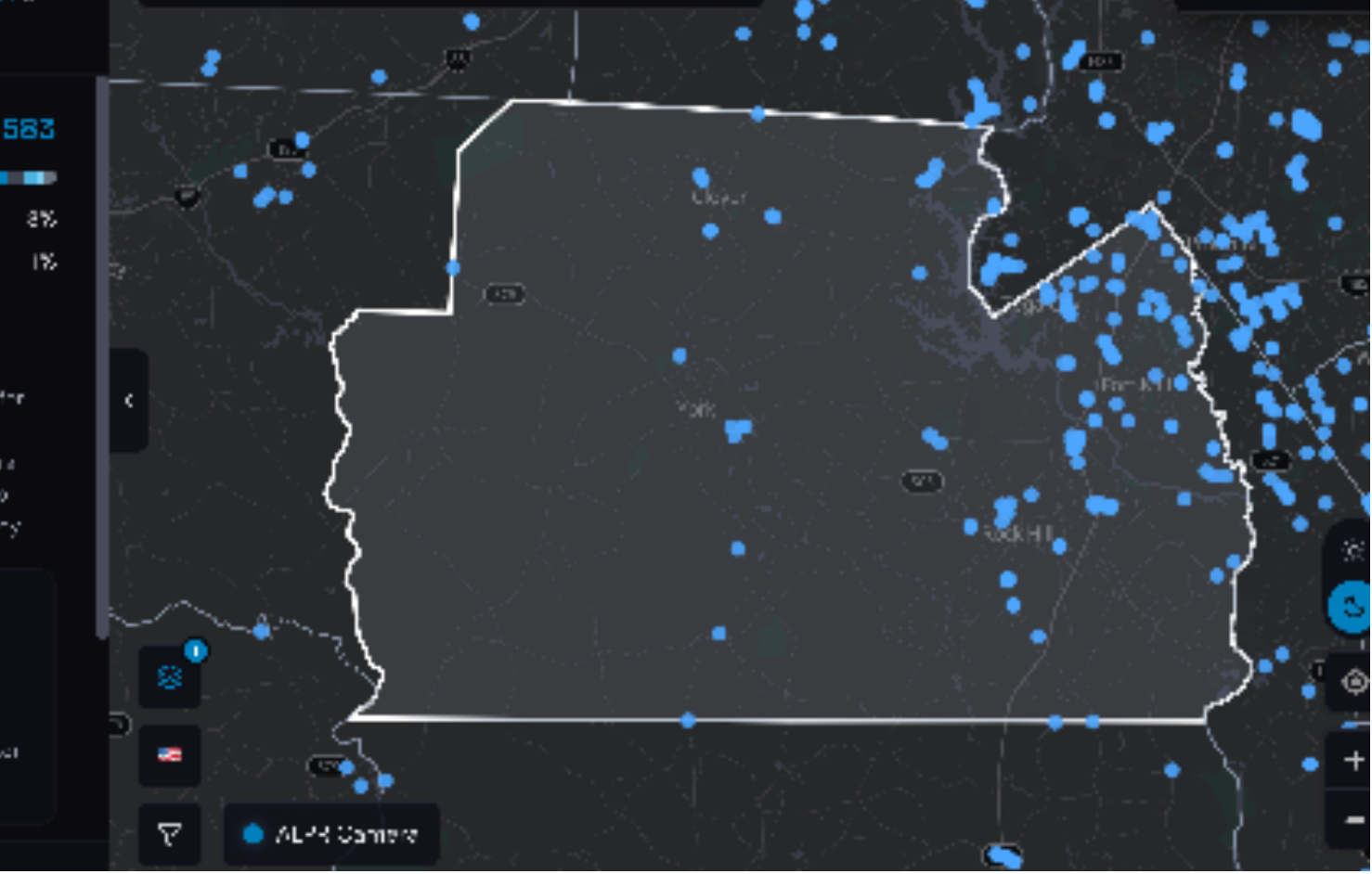
YORK COUNTY, S.C.- Law enforcement agencies brought Flock to the York County community in 2021. What started as the sheriff’s department purchasing seven Flock Safety cameras has turned into 45 cameras around our county. The Clover Police Department (CPD), specifically, has seven cameras and York County Sheriff’s Office (YCSO) has 19. Neighboring districts like Rock Hill and Fort Mill have upwards of 20 cameras. In an interview with York County District Two Representative Andrew Litten, he says, as of right now “the cameras are an asset more than a hindrance”. He stated several times that he trusts CPD and YCSO, but understands the importance of keeping the information gathered out of the wrong hands. The annual average daily traffic for Charlotte Highway is 36,700 vehicles according to the South Carolina Department of Transportation as reported by The Herald. Just on the stretch of Hwy. 274 outside of Crowders Creek Elementary, there are two Flock cameras pointing at either side of the road. With a minimum Flock reported mistake rate of 4%, an estimated nearly 1,500 mistakes a day are made just on that small stretch of road. When asked about this number, Litten responded that 4% was close enough to zero for his comfort. He added that his “opinion is subject to change” if they become a bigger problem. Since Oct. 2024, Will Freeman’s organization, DeFlock, has attracted a growing number of supporters. Their mission is to locate Flock cameras, educate citizens and unveil the negative impacts and secrets of Flock Safety. DeFlock York County, a branch of the organization from the area, started a petition on change.org on Aug. 12, 2026. The petition has 2,609 signatures at the time of publication. Every signature goes towards the organization’s mission to call for the removal of Flock cameras in the community. When asked how many signatures would be needed to actually raise an issue, Litten said that for it to become a real issue in the council there must be 10% of the voting public in the county. He also added that not every signature on a change.org petition can actually be trusted because signatures must be followed by a voting card. Deflock’s criticism of Flock cameras stems from concerns over misuse, errors and the invasion of privacy experienced by innocent civilians. For a recent example, Flock system error led to a police officer holding a Rock Hill man at gunpoint after the camera system falsely flagged him for driving a stolen vehicle. Litten suggested that errors like this are “human errors and not related to Flock itself and the AI”. When this argument was countered by asking “how do you rule out human error and how do you make this better” he replied that CPD and YCSO has “better guardrails, guidelines, policies and procedures” going into action. After reaching 2,000 signatures, the starters of the petition posted a message to the supporters. It read, “the message remains simple: We can support law enforcement and public safety while still demanding limits on mass surveillance. Residents deserve to know who can search this data, how it is being used, how long it is retained, what outside agencies can access it, how misuse is detected, and what happens with the enormous amount of information these systems collect about people who are not suspected of committing any crime”. Trent Faris, YCSO Public Relations officer, has responded to questions regarding the issue with “We do hope that once we have our website transparency page up and the transparency portal provided by Flock Safety, both will help dispel any concerns the public may have”. Recently, CPD has published a transparency portal that partially answers these concerns. To read more on this go to https://transparency.flocksafety.com/clover-sc-pd . Much of the information in the portal relies on the trust that officers and entire departments will not misuse the technology. Though this publication answers questions, as evidenced by the petition, the people of York County have a hard time trusting that any department will lawfully follow the prohibited uses. Additionally, the transparency page and portal that CPD and YCSO uses are provided by Flock Safety. To try to combat misuse, Flock forces logs to be kept on reasons for accessing the data. Problems arise when officers access data with vague justifications such as “follow-up” or “investigation”. There are people across many departments who are able to access and potentially this data. Some who have been affected by misuse report that they feel they cannot come forward because the offenders carry a badge and a gun and they worry about facing retribution for making a report. Across the country, concerns continue to rise. The county of Mooresville, N.C. has recently signed a contract with Flock to use their drones for surveillance in addition to the Automatic License Plate Readers. The Charlotte Observer reported in July that “A CMPD officer was arrested after being accused of using the Flock database to search the license plate of a person buying drugs from his friend in Boone to see if they were an undercover police officer”. Just a few states over, Florida’s Department of Transportation (FDOT) has banned the usage of Flock cameras on state-owned roads. FDOT has given law enforcement agencies 30 days to remove the Flock cameras and other ALPRs.
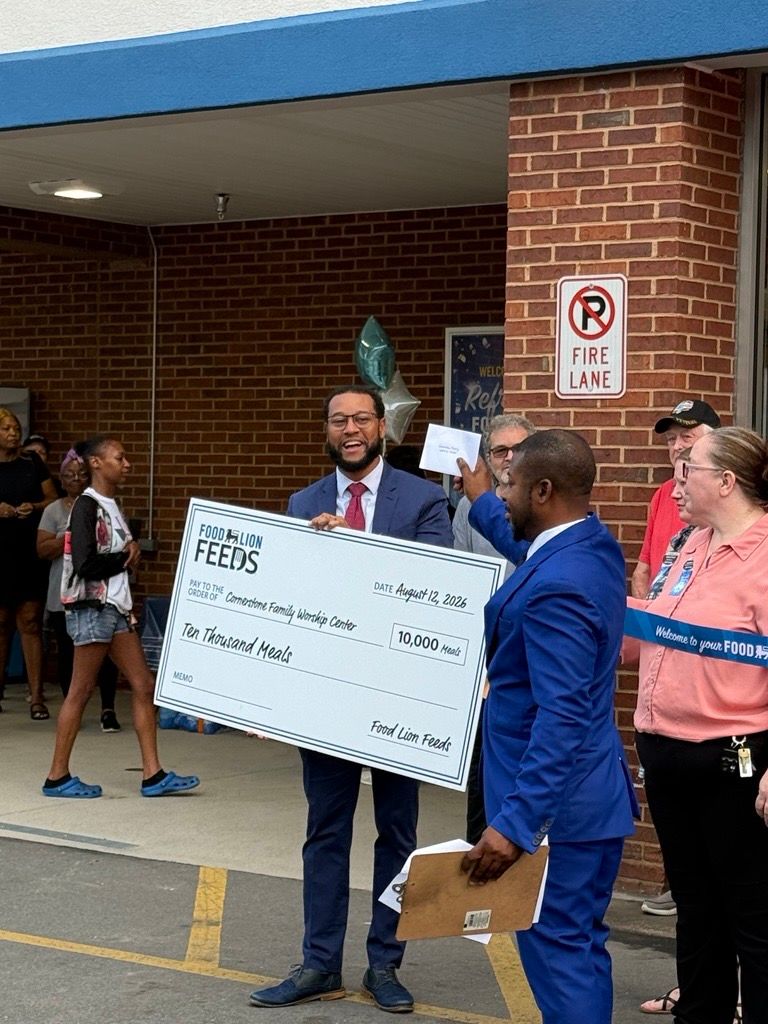
CLOVER S.C.- On Aug.12, Food Lion Clover held a ribbon cutting ceremony celebrating the series of renovations to the new store. Dozens of residents, Food Lion officials and Ahold Delhaize employees gathered around the front of the store to celebrate renovations and many charitable raffles and donations. “We wanted to make the produce visible to customers, we made it visible for customers”. Store Manager John Essel explained how every change or addition was made with the customer in mind. Essel reinforced that the changes were made based on customer feedback on surveys. Wider aisles were made for customers to shop comfortably next to each other and the floors were improved to make the shopping experience more pleasurable. “We don’t want the community to buy products to keep in the house for two days. We want them to be able to keep it for more than two days”. New produce misters now activate every fifteen minutes, keeping food fresher for longer. However, more than just the physical store was updated. Employees were given further training to better assist customers and to remove spoiled produce more frequently and attentively. Prior to the cutting of the ribbon, marking the official reopening, Food Lion gave out a total of $3,700 in Food Lion gift cards to the first 10 customers in line. The grand prize winner, Clover resident David Sorocco, arrived at 6:15 a.m. to secure a spot in line for the gift card drawing. “It’s nice, I get to choose what I want”. Sorocco, possibly inspired by the charitable events of the day, did not even think twice and plans to give half of his $1,000 to his friend, “We will both eat for the next couple of months.” During the conversation, another shopper stopped by and said “Buy yourself some steaks”. At the end of the ceremony, Essel presented Rev. Bradley Bien-Aime of the Corner Stone Family Worship Center in York with a check commensurate to 10,000 free meals to be gifted by Food Lion of Clover. “Without Food Lion Clover, we would really be less equipped to serve the community” Bien-Aime also mentioned how, besides feeding the community, their mission also reduces food waste for the community as they are able to accept food that is still good, but not able to be sold. “Meeting the physical needs, not just the spiritual means”. Bien-Aime briefly mentioned how they are a giving ministry, not a taking ministry, and how this large donation will be so important to the food pantry and to the community they serve. “What a shock, what a surprise, what a blessing”. This “blessing” will allow the food pantry to keep more supplies on hand. The partnership is going straight into the “mouths and stomachs of the less fortunate”. The large scale renovations and the charitable givings of the store will not affect the public’s wallets. The management was insistent about how prices will not be raised in response to this. “We are one of the lowest cost grocery stores in the US right now, everything is the same price as before” was Essel’s response to prices in the store.
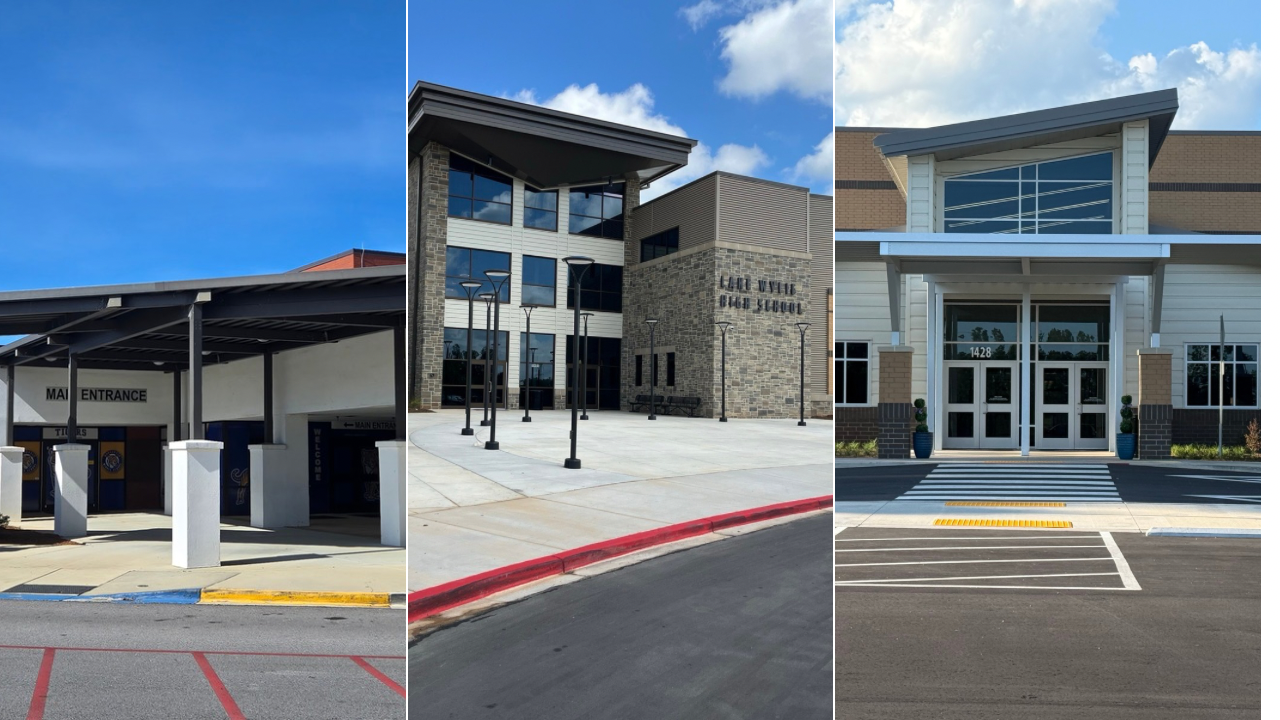
CLOVER, S.C.- The Clover School District began the school year with three new schools. The newly built Lake Wylie High School and Liberty Hill Elementary School on Cannon Ball Run stand alongside the renovated Ninth Grade Campus, which has become Roosevelt Middle School. The opening of the three schools reflects a major period of growth for the Clover School District. With the community continuing to expand, the district faced the challenge of creating additional space while ensuring students would have access to the same facilities and educational opportunities as Clover High School. The new buildings are not simply additions to the district, but a reflection of how much the Clover community has changed over the years. When asked about the experience of opening three schools in the same year, Dr. Sheila Quinn answered decisively: “we created the playbook”. Quinn discussed both the stress of the district’s “Friday meetings” and the excitement of having two separate high schools for the first time in many decades. The last time the district had 2 separate high schools was in 1970, the year the segregated Roosevelt High School was closed, the namesake of the new Roosevelt Middle School. On opening three new schools in only a year Dr. Quinn says, “I do not recommend that… but I am so proud of the hard work that our staff did to open three schools. It was a tough job”. District officials are so proud of the new construction, but are remaining very weary and apprehensive about the idea of opening three new schools in the same year in the future. “Our neighbors in Fort Mill are used to opening a school every year or every other year. We opened three in one year”. It is definitely an exciting year for the school district and historic in the way this may not happen again for CSD. Despite the new size of our district, one thing will never change in CSD’s eyes, their promise of “Each Child, Each Day…Excellence”.

WASHINGTON — The senior senator from South Carolina, Lindsey Graham, died July 11 in his residence in Washington, D.C., at the age of 71. The cause of death was aortic dissection, according to the medical examiner. Senator Graham was not a career politician; he served more than 30 years in the U.S. Air Force before entering politics. His seat was temporarily filled by his sister, Darline Graham Nordone, on July 13, appointed by Gov. Henry McMaster. Despite not having any prior political experience, she is now the first female senator from South Carolina. Hopeful Republican candidates have one week to file between July 21 and July 28. According to the Board of Voter Registration and Elections, the Republican primary will be held Aug. 11. There is no registering for a party in South Carolina; however, voters can only vote for the party they declare during the primary cycle. According to the South Carolina State Election Commission, “The South Carolina State Election Commission (SEC) has completed its review of South Carolina election law regarding voter eligibility for the August 11 Special Republican Primary. Based on that review, voters who participated in the June Democratic Primary are not eligible to vote in the August 11 Special Republican Primary. Voters who participated in the June Republican Primary, or who did not vote in either party’s June primary, are eligible to vote in the August 11 Special Republican Primary.” The winner of the primary will be the Republican nominee on Election Day, Nov. 3. Dr. Annie Andrews will remain the Democratic Party nominee. In his tenure as senator, Graham was known for both his close but ultimately tumultuous relationship with President Trump and his ability to work across the aisle — a trait many say is needed now more than ever. In 2023, the Lugar Center ranked Graham in the top third of senators for bipartisanship. Examples include voting to confirm both of Obama’s Supreme Court nominees, Elena Kagan and Sonia Sotomayor, while also blocking the nomination of Merrick Garland. Democratic Sen. Cory Booker even called him an “unlikely friend” during a social media video posted after Graham’s death. Graham served in the state House of Representatives for one term before being elected to the U.S. House of Representatives in 1995. He served as the representative for South Carolina’s 3rd District for eight years. Graham campaigned for his Senate seat after long-term senator and professional friend Strom Thurmond announced he was not going to continue his career as a senator. Graham served for 23 years. During the latter part of his tenure, he was chair of the Budget Committee. Graham served the nation as an active-duty member of the Air Force for seven years, then another combined 26 years between the Air National Guard and later the Air Force Reserve. For his service, he was awarded the Bronze Star. He was an alum of the University of South Carolina with a bachelor’s degree in psychology and a Juris Doctor from the University of South Carolina School of Law. Upon graduation, he became a commissioned officer of the JAG Corps. Graham died in a way most people wish they would, doing what they loved. Graham returned to his residence in D.C. after a meeting in Kyiv with President Zelenskyy, where he sought to discuss a push for more humanitarian and military aid for the war-torn country. He was negotiating deals up until his untimely death. Early in his political career, Graham was an advocate against the rights of foreign combatants in U.S. custody. The ACLU reports he did not believe that they deserved legal representation. Graham was also a vocal proponent of “World War II”-style freedom of speech restrictions during an interview with “60 Minutes.” PBS News reported that in 2013, “Graham and his close friend Arizona Senator John McCain tackled another politically perilous, but critical issue, immigration. As one of the so called Gang of Eight, Graham helped push immigration reform through the Senate, aiming to block illegal immigration with more border agents while offering a path to citizenship for those already in the country.” Graham was known to change his viewpoint from time to time. For example, he saw Roe v. Wade as precedent and said in an interview it “should not be overturned without good reason.” Upon its overturning, Graham said that this topic should be left to the states, as it always should have been. Two months later, in September 2022, NBC News reported he “introduced legislation to institute a federal ban on abortion after 15 weeks.” His views on Trump also changed. When running against Trump in 2015, he expressed that Trump did not “represent my party,” as reported by PBS News. However, as Trump entered the presidency, Graham became a trusted ally. Ukrainian President Volodymyr Zelenskyy, who said Graham had visited the country 10 times since Russia’s invasion began in February 2022, called him “a true defender of freedom and the values that make our world safer.”
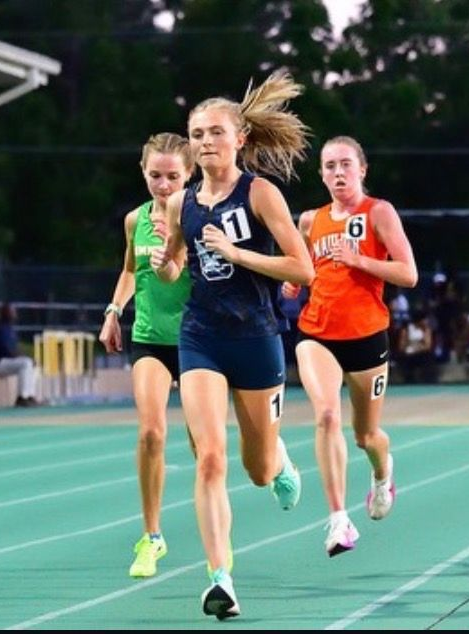
COLUMBIA, S.C. — Clover senior Ella Nighbor swept the 1,600 and 3,200 meters at the South Carolina High School League 5A Division I State Championships on May 14, winning her second straight 1,600 title and breaking a 21-year-old state meet record at Spring Valley High School. Nighbor, a University of South Carolina commit, entered as the top seed in the 1,600 and won it in 4:56.28, then returned about an hour later to take the 3,200 in 10:43.17. Both races came just off her lifetime bests of 4:54.36 and 10:26.58, performances coach Christopher Young described as championship efforts rather than time trials. Her winning 3,200 time of 10:43.17 broke the SCHSL 5A state meet record of 10:47.72, a mark that Spring Valley’s Kate Niehaus had held since 2005. Niehaus still owns the meet’s 1,600 record of 4:55.45, set in 2006; Nighbor’s 4:56.28 this year fell just 0.83 seconds short of breaking it. “Ella running the double is an incredible feat across the board,” assistant coach Ben Clark said. The 1,600 victory made Nighbor a two-time state champion in the event, a year after she won it as a junior and placed sixth in the 3,200. The double gives her four individual state titles, alongside a team cross country state championship and 13 school track records. That body of work, which also includes a 5K best of 16:40.44 and a 2,000-meter steeplechase mark of 6:58.71, establishes her in Young’s assessment as the most accomplished female distance runner in Clover history and one of the best in state history. Nighbor’s 1,600 title came in a 1-2 Blue Eagle finish, with senior Ava Jagielski, an Anderson University commit, running on Nighbor’s shoulder through 800 meters before kicking past Lexington’s Kendra Miles in the final 200 to take second in a personal-best 5:04.50. “These ladies have made remarkable progress through the years, achieving success they never imagined,” Young said. “To have them go one and two in their final high school race together — it couldn’t be a better ending to our four years together.” For Nighbor, the double closed a four-year Clover career and, by Young’s account, delivered the program’s signature moment of the meet. The Blue Eagles also placed fourth in the boys 4x800 relay in a school-record 7:53.44, with top-six finishes from Trinity Hall and Clara Powell in the high jump and Jamarquise Wilson in the 400 hurdles. The day marked a milestone for a program splitting between Clover and Lake Wylie, with several seniors competing one final time, none more accomplished than Nighbor. Clark put it simply: “She is such a hard worker, she is just now scratching the surface of all the great things she is going to do.”
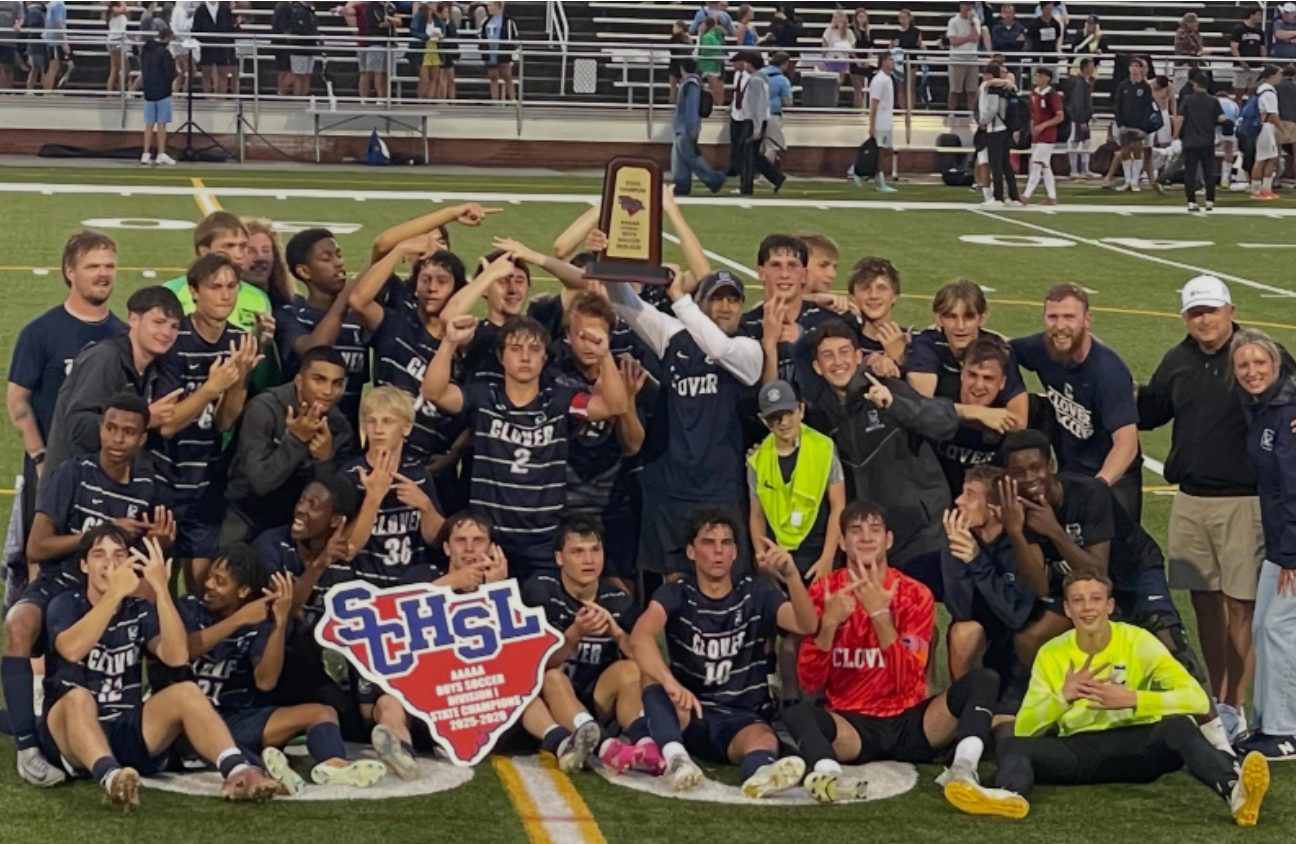
COLUMBIA, S.C. — The Clover High School men’s soccer team captured the SCHSL Class AAAAA Division I State Championship at Memorial Stadium, defeating Wando High School 1-0 in a grueling match extended by a three-hour weather delay. The two teams battled through 80 scoreless minutes of regulation. Clover’s Thomas Jenkins missed early chances in the 11th and 22nd minutes, while goalkeeper Brinkley kept the game deadlocked with a crucial save against Wando in the 39th minute. Just as regulation ended, a violent thunderstorm forced officials to suspend play, sending teams to the locker rooms and fans to their cars for over three hours. When the two 10-minute overtime periods finally began, Wando—who entered the match 23-2—unraveled due to disciplinary issues. Two red-card ejections, including one in the 57th minute following a second yellow card, reduced the Warriors to just nine men. Clover wasted no time capitalizing on the numerical advantage. With under three minutes remaining in the second overtime, Jenkins found space on the wing and delivered a perfectly weighted cross into the box. Senior Evan Tubiolo timed his run flawlessly, heading the ball into the back of the net to break the tie. Wando mounted a dangerous late attack to equalize, but Brinkley secured the shutout victory with a commanding save in the final minutes. The 1-0 golden-goal finish capped off a dramatic five-hour ordeal, providing a perfect championship sendoff for Clover’s senior class.